

Stepping Away from the Screen Is Trading Too
Why watching the chart non-stop makes decisions worse, how many "opportunities" each timeframe creates, how to let MT5 watch for you and a few simple rules for knowing when to close the laptop.
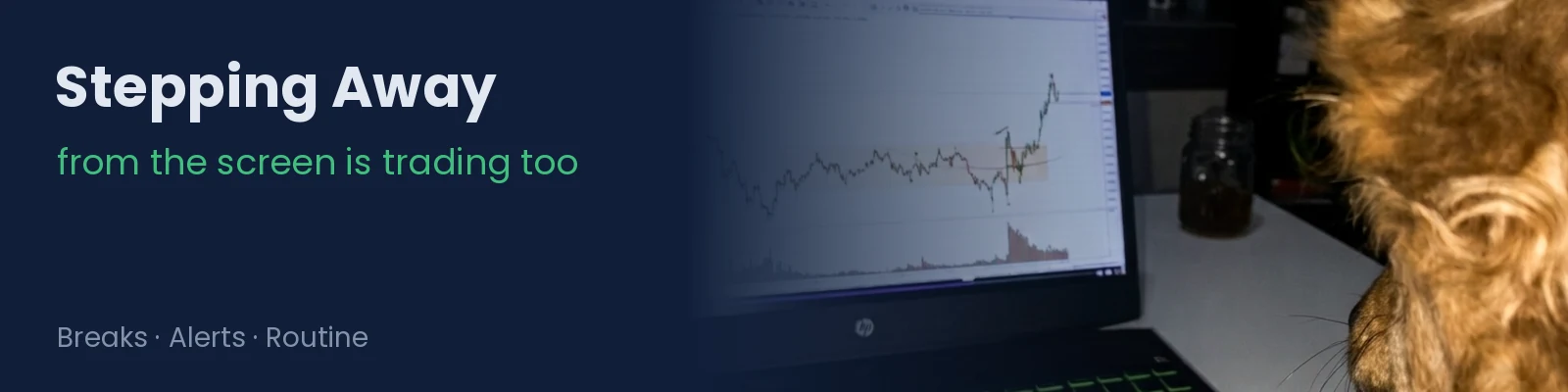
There is a companion at my desk who knows nothing about candles or stops, but knows exactly when it is time to stop. Her name is Jackie. Sometimes she leans towards the screen as if she were analysing the breakout, and a little later she reminds me that there is life outside the chart. Over time I have learned that she is right more often than many indicators: stepping away from the screen, at the right moment, is also part of trading well.
This article explains why watching the chart non-stop usually makes decisions worse and how to organise yourself in MT5 so you can get up from your chair without missing anything important.
1. More time in front of the chart is not more information
The longer you watch the price, the more moves you see, and almost all of them are noise. The problem is not just fatigue: every new candle becomes a small decision. Do I enter? Do I move the stop? Do I close now?
The timeframe decides how many of those decisions you face each day. In a market that trades 24 hours:
| Timeframe | Candles per day |
|---|---|
| M1 | 1,440 |
| M5 | 288 |
| M15 | 96 |
| H1 | 24 |
| H4 | 6 |
| D1 | 1 |
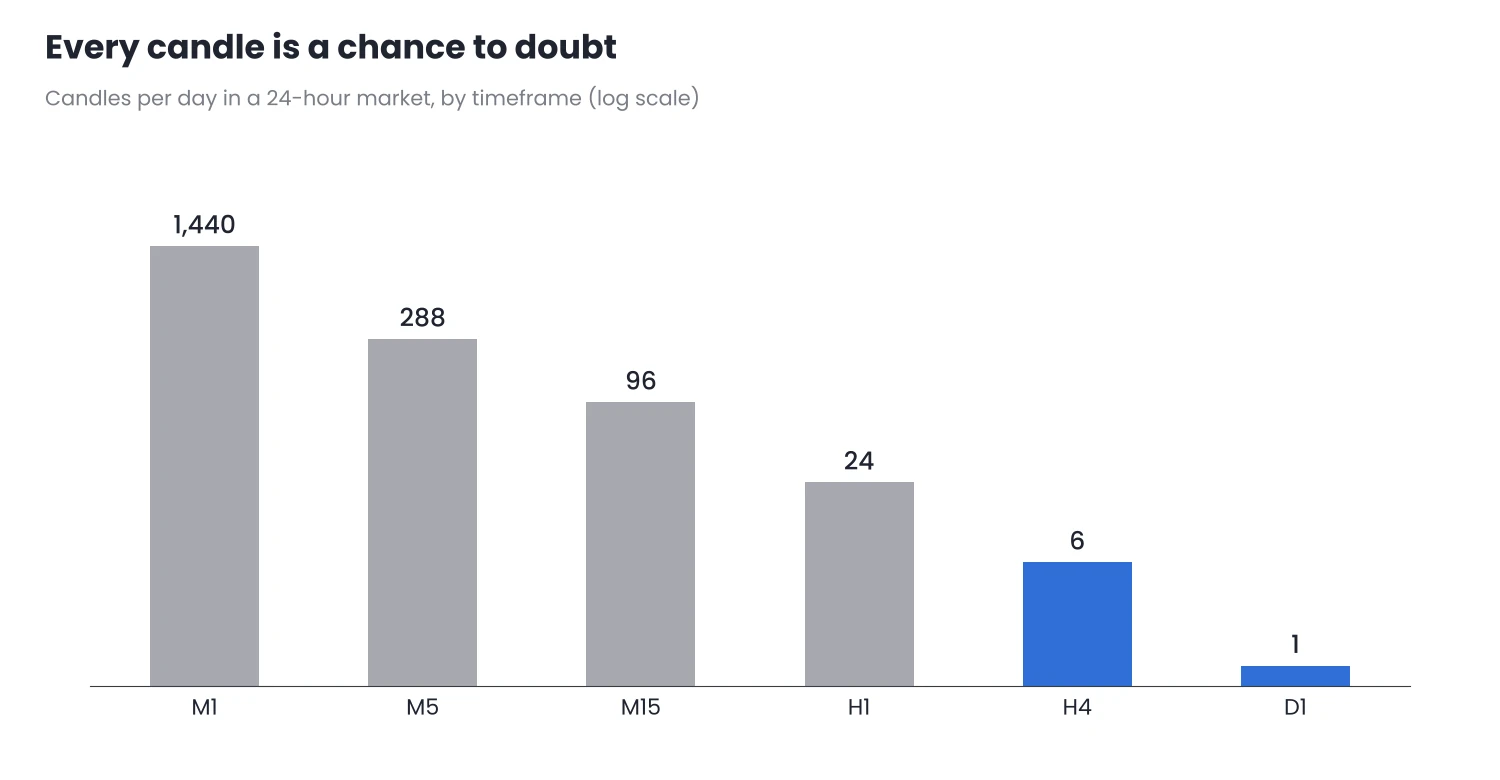
Figure 1. Every candle is a chance to doubt. On M1 there are 1,440 a day; on H4, six.
If your method is designed for H4, watching the M5 chart “to fine-tune” only adds decisions the plan does not cover. That is where the typical mistakes appear: entering too early, closing a good trade on a normal pullback or tightening the stop for no reason. I explain this in more detail in Managing the Stop After Entry.
2. Separate analysis from execution
The most effective way to be able to step away is to do the work at two different moments:
- Analysis, calmly and at a fixed time. You review the trend, mark the zones, decide which trade you would take and with what risk. If you use Zone Risk Planner, this is when you plan the entry, stop, target and lot size; it does not open or close trades, it only gives you the plan.
- Execution, without improvising. You place the orders and alerts that come out of that analysis. From then on, the platform does the work.
Once the analysis is done, there is nothing new to decide by watching every candle. And if there is nothing to decide, there is no reason to stay.
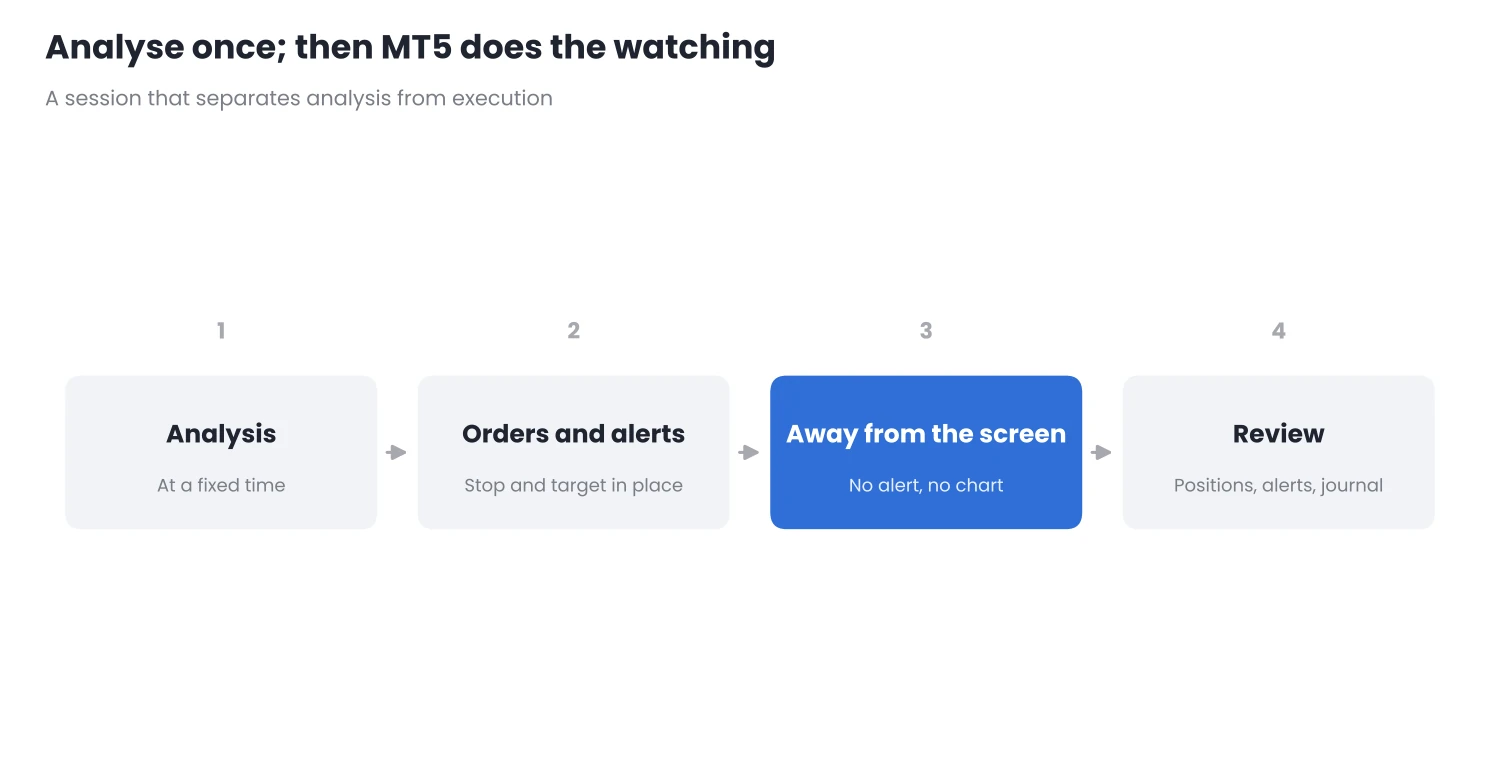
Figure 2. Analysis happens once; after that, orders and alerts do the watching.
3. Let MT5 watch for you
To get up with peace of mind, every trade or idea needs to be covered:
- Pending orders with stop loss and take profit. They sit on the broker’s server and stay active even if you close MT5. Give them an expiration if the idea only holds for one session. I explain how each type works in Order Types in MT5 and Slippage.
- Price alerts. In the Alerts tab of the Toolbox you create alerts at the levels that matter to you. Note: alerts run in your terminal, so they only trigger if MT5 is open (for example, on a VPS).
- Mobile notifications. Under Tools → Options → Notifications, with the MetaQuotes ID from the MT5 app, alerts reach your phone. They are for staying informed, not for analysing from the sofa.
With this in place, the rule is simple: if there is no alert, there is no need to look at the chart.
4. Rules for closing the laptop
Stepping away works better when it is decided in advance. Some rules you can include in your trading plan:
- A fixed end-of-session time. Whatever happens, at that time you review positions, adjust orders if the plan says so and close the platform.
- A break after a loss. For example, fifteen minutes away from the screen before considering another entry. Decisions made right after a loss are usually the worst.
- A break when the daily limit is reached. If your plan has a daily loss or trade limit, the session ends when it is reached. I explain this in During a Losing Streak.
- Do not open timeframes your plan does not use. If you trade H4, the M1 chart is not part of your routine.
In my case, the easiest rule to follow is not one I came up with: when it is time for Jackie’s walk, the laptop closes. It is a fixed break that does not depend on how the day is going, and that is exactly why it works.
5. Come back with a clear head
When you come back, instead of looking straight at the chart, it helps to follow an order:
- Check positions and orders, not the price: has anything been triggered? Has a stop been hit?
- Check the alerts that arrived while you were away.
- Compare with the plan. If nothing you expected has happened, there is nothing to do. That is a valid answer.
- Record what you did in your journal, including when the decision was to do nothing.
Very often, the best trade of the day is the one you did not take because you were not watching every candle.
Conclusion
- Watching more is not knowing more. The lower the timeframe you watch, the more decisions you face, and most of them are noise.
- Separate analysis from execution. Analyse at a fixed time, leave orders and alerts in place and let MT5 watch.
- Decide in advance when you step away: a closing time, a break after a loss and a daily limit. And if you have someone like Jackie to remind you, all the better.
This week, try setting an end-of-session time and not opening the chart in between unless an alert goes off. Do it first on a demo account and record in your journal whether your decisions change.
Want to bring this to your chart?
Jasopex tools for MetaTrader help you plan your risk before you trade.
See the tools