

Leverage and Margin in CFDs: What Changes and What Doesn't
What margin is, why leverage does not change what you lose if your stop is hit, what effective leverage is and what limits apply to retail clients in the European Union.
Leverage is probably the most misunderstood concept in CFD trading. It is often said that high leverage is riskier, but that is only half true: if the lot is sized correctly, what you lose when your stop is hit is exactly the same at 1:30 as at 1:500. What changes is something else. This article explains what margin is, what really changes with leverage and which number you should watch instead.
1. What margin is
A CFD gives you exposure to an asset without paying its full value. The broker only holds part of it as collateral: the margin.
Margin = notional value of the position ÷ leverage
If you open a position with a notional value of €20,000 on an index at 1:20 leverage, the broker holds €1,000 of margin. The other €19,000 do not leave your account, but your profits and losses are calculated on the full €20,000.
2. What leverage does not change
The loss if the stop is hit depends on three things: the position size, the distance to the stop and the value of each point. Leverage does not appear in that calculation.
Loss at the stop = lots × distance to the stop × point value per lot
With the same lot and the same stop, the loss is identical at any leverage. The only thing that changes is the margin held:
| Leverage | Margin held | Loss if the stop is hit |
|---|---|---|
| 1:10 | €2,000 | €200 |
| 1:20 | €1,000 | €200 |
| 1:30 | €667 | €200 |
| 1:500 | €40 | €200 |
Position with a notional value of €20,000 and a stop 1% from the price. Illustrative example, without costs.
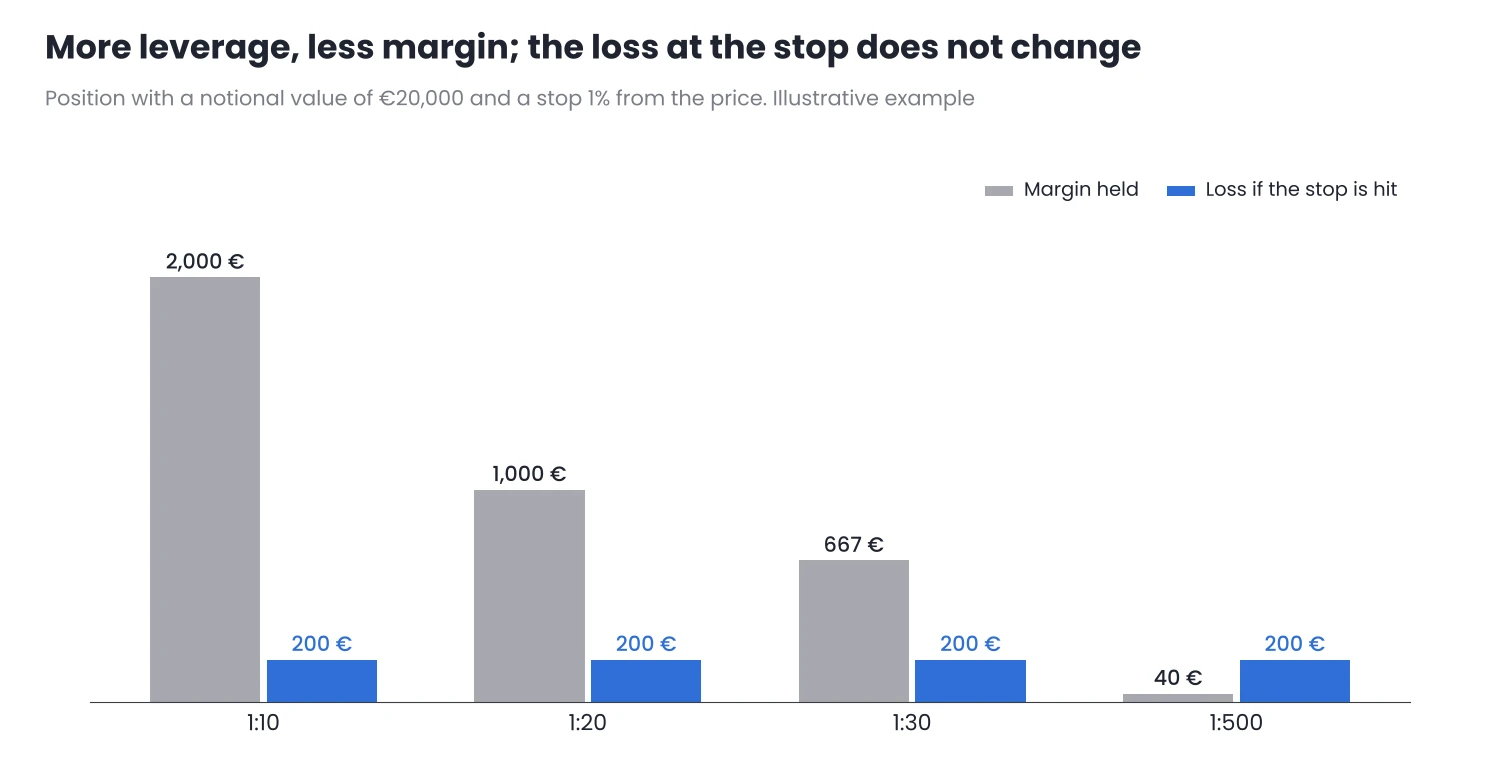
Figure 1. Margin falls as leverage rises; the loss at the stop stays the same.
That is why, if you size the lot from the risk you want to take rather than from the available margin, the broker’s leverage becomes secondary. To calculate that lot you can use Zone Risk Planner or its free version, Zone Risk Planner Core. Neither opens or closes trades: they give you the position size for the risk you choose.
3. What does change: how much you can open
High leverage does not increase the risk of a correctly sized position, but it allows you to open positions far larger than the account can withstand. The problem is not the broker’s maximum leverage, but the leverage you actually use.
Effective leverage
The number worth watching is effective leverage:
Effective leverage = notional value of all open positions ÷ account equity
With a €10,000 account and open positions worth €20,000 in notional value, effective leverage is 2:1, even if the broker allows 1:30. That number tells you how much your account moves when the market moves: with 2:1 effective leverage, a 1% adverse move costs 2% of the account.
It matters most when the stop does not protect you: an opening gap, a news release or a weekend. If the market opens 2% against you, beyond your stop, the damage depends on effective leverage:
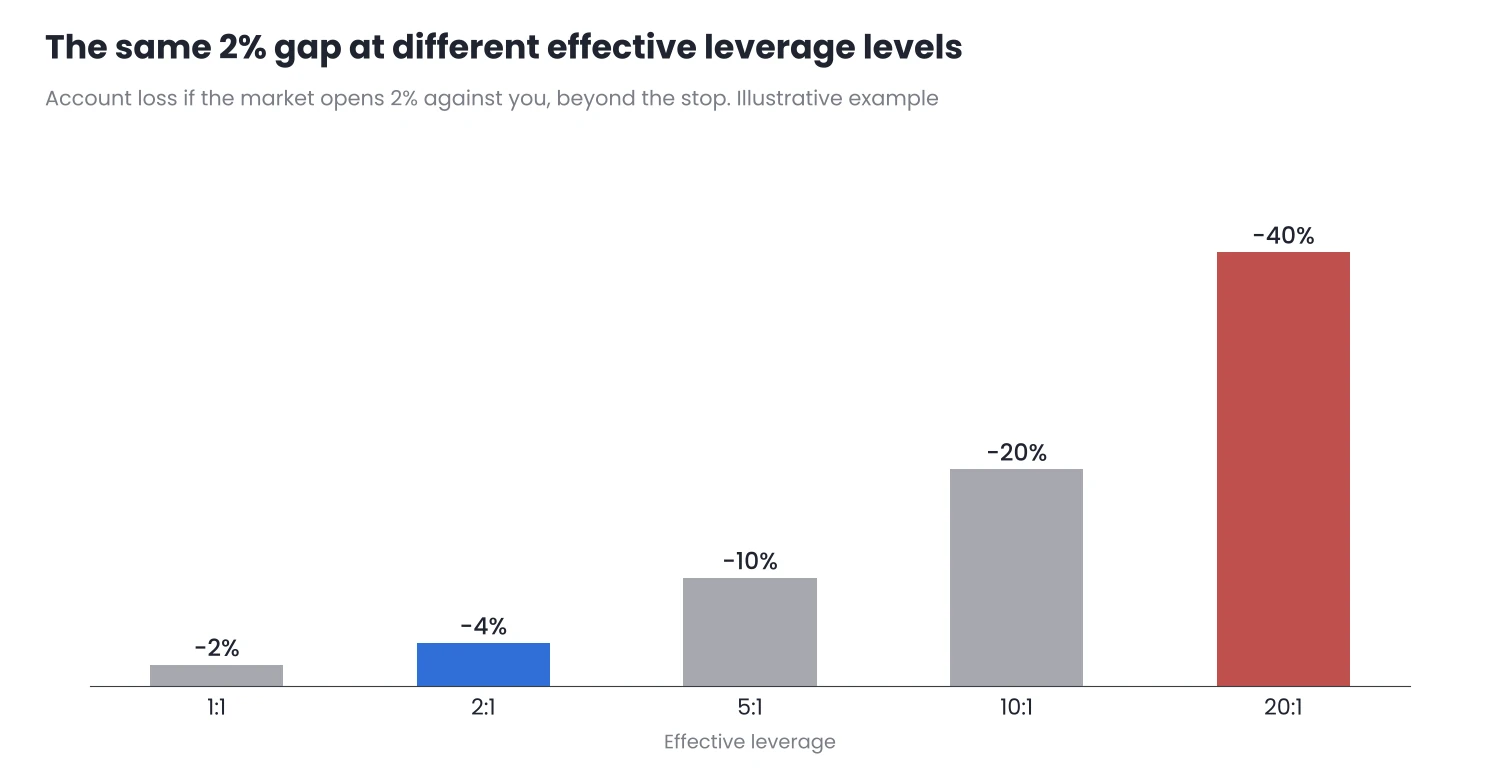
Figure 2. The same 2% gap costs 4% of the account at 2:1 and 40% at 20:1.
Swaps are calculated on the notional value
The swap on a position you hold overnight is calculated on its notional value, not on the margin. A large position with little margin pays the full swap on its entire size.
4. Limits for retail clients in the European Union
Since 2018, retail clients in the European Union have a maximum leverage when opening CFD positions:
| Underlying | Maximum leverage | Minimum margin |
|---|---|---|
| Major currency pairs | 1:30 | 3.33% |
| Other pairs, gold and major indices | 1:20 | 5% |
| Commodities (except gold) and non-major indices | 1:10 | 10% |
| Shares and other underlyings | 1:5 | 20% |
| Cryptoassets | 1:2 | 50% |
In addition, the broker must close positions when account equity falls below 50% of the initial margin of the open positions, and a retail client cannot lose more than the amount deposited. Before trading, check with your broker which category applies to each asset: not every index counts as “major”.
5. How to monitor it in MT5
In the Trade tab of the Toolbox, the bottom line shows five account figures:
- Balance: the account balance without open positions.
- Equity: the balance plus or minus the floating result.
- Margin: what the broker holds as collateral.
- Free margin: equity minus margin. It is what you can use to open new positions.
- Margin level: equity divided by margin, as a percentage. If it falls to the broker’s stop out level, positions start to be closed.
To calculate effective leverage, add up the notional value of your positions (lots × contract size × price, in the account currency) and divide it by equity. With a very high margin level and low effective leverage, the account is far from any forced close.
Conclusion
- Leverage does not decide what you lose at the stop. The lot, the distance to the stop and the point value do.
- What matters is effective leverage: the notional value of everything open compared with equity. It decides the damage of a gap or a news release that jumps the stop.
- EU limits and the margin close-out protect you, but they do not replace a proper risk calculation. Free margin is not an invitation to open more.
Always size the lot from your risk, not from the available margin, and check your effective leverage before holding positions over the weekend. Try it first on a demo account.
Want to bring this to your chart?
Jasopex tools for MetaTrader help you plan your risk before you trade.
See the tools